

CRAFTSMANSHIP
CRAFTSMANSHIP
Even with advanced manufacturing techniques, it isn’t possible to automate the production of great guitars. The complexity of the task, combined with the need for constant awareness of the materials being used and the ability to adjust for minute variations, means that there is no substitute for the skill and sensitivity of experienced craftspeople.

-
디자인을 훌륭한 기타로 구현
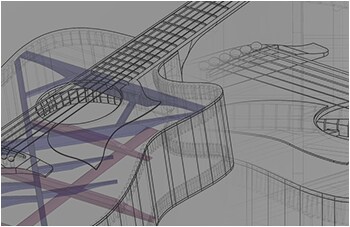
디자인 대로 훌륭한 악기를 만드는 것은 쉽지 않은 작업입니다. 기술 도면은 악기가 의도한 톤이나 원하는 특성과 소리를 구현하는 데 필요한 제작 방식을 전달할 수 없습니다. 새 기타 제작이 시작되기 전, 적절한 생산 공정 개발을 위해 디자이너의 계획과 의도를 공장 장인과 상의합니다. 모든 기타가 다르기 때문에, 각 기타에 이상적인 생산 방식과 작업 흐름을 고안하는 것이 매우 중요합니다.
-
철저한 작업

가끔 '무리해서' 일하는 것이 가능한 모든 상황에서 일관성 있게 원하는 품질 구현을 보장하는 유일한 방법이 되기도 합니다. Yamaha는 대부분 제조 디테일을 극한까지 추진하는데, 결과물을 보면 그럴 만한 가치가 있습니다. 마감 작업 전 제조 공정 초기에 어쿠스틱 기타 바디와 넥을 미리 맞추는 Yamaha의 공정이 한 예시입니다. 넥과 바디의 조인트 품질이 악기의 톤과 반응을 최대화하는 데 중요한 역할을 한다는 점은 경험을 통해 알 수 있습니다. 즉, 넥과 바디가 직접 접촉하는 부분이 완벽하게 맞춰져야 합니다. 넥과 바디를 한 쌍으로 제작하고 마감하는 데서 비롯되는 조절과 일관성 수준은 더 많은 노력을 기울일 가치가 있습니다.
-
기계의 정밀성과 인간 기술의 이상적 결합
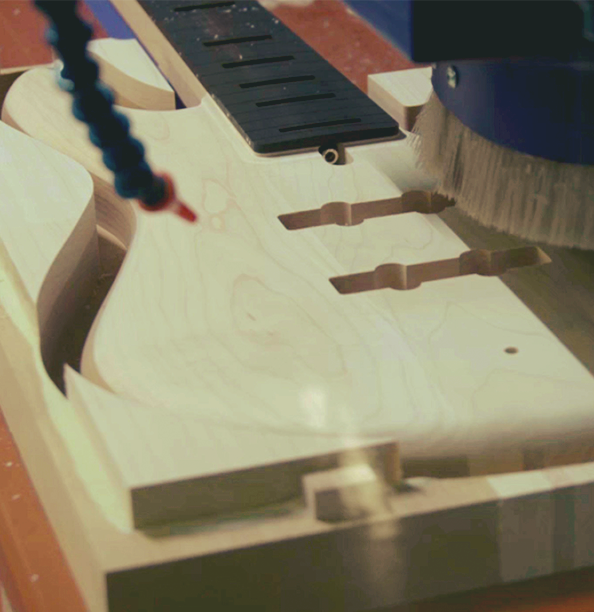
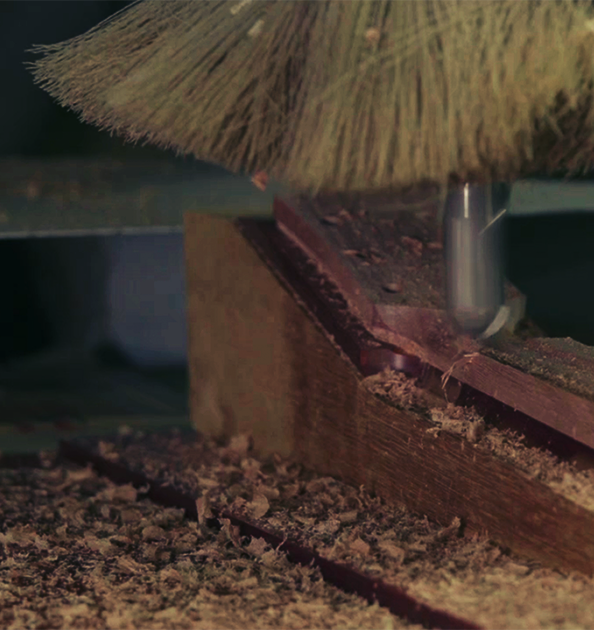
기계에 가장 적합한 작업이 있습니다. 특히 극한의 정밀성과 반복 작업이 요구되는 작업이 여기에 해당됩니다. 예를 들어, 핑거보드 프렛 슬롯 절단 작업은 컴퓨터가 제어하는 기계의 정밀한 작업이 필요한 중요 작업입니다. 하지만 기타리스트가 원하는 바를 제대로 충족하는 악기를 제공하려면 개별적인 관심과 융통성이 요구됩니다. 여기에서 Yamaha 장인의 기술과 경험이 빛납니다.
-
마무리 손질
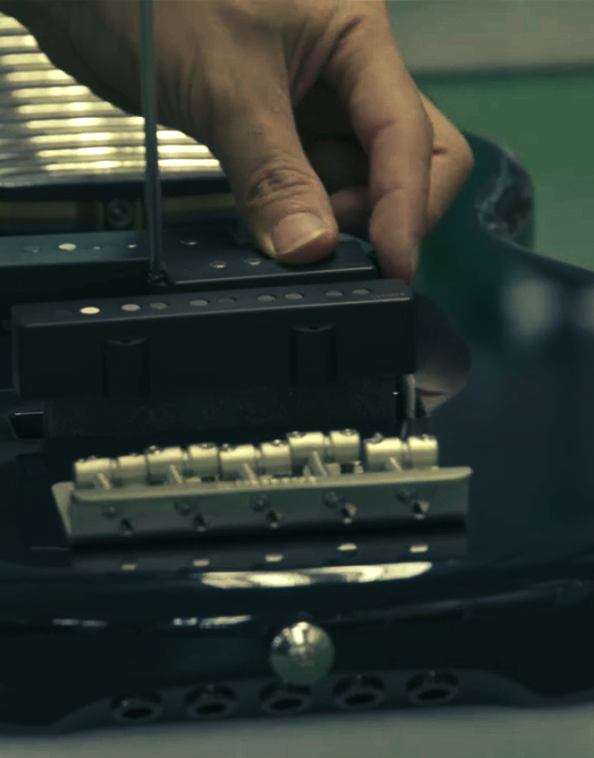
Yamaha는 모든 기타와 베이스가 공장에서 최적의 연주 조건을 유지하도록 노력합니다. 일부 연주자는 개인의 연주 스타일에 맞는 간단한 조정을 원하겠지만, 프렛 레벨링과 마무리 같은 중요 디테일은 공장에서 커스텀 매장으로 바로 넘어갑니다. 최적의 톤과 성능을 구현해야 할 경우 가장 주의를 기울여야 할 생산 단계는 최종 조립입니다. 부품을 적절히 배치하지 않거나 단단히 부착하지 않으면 사운드와 연주 성능이 모두 저하될 수 있으므로, 원활하고 효율적인 조립을 위해 조립 워크스테이션과 공정을 설계하고 정립하여 제작자가 완벽한 결과물을 만드는 데 온전히 집중할 수 있습니다.
-
도구 제작
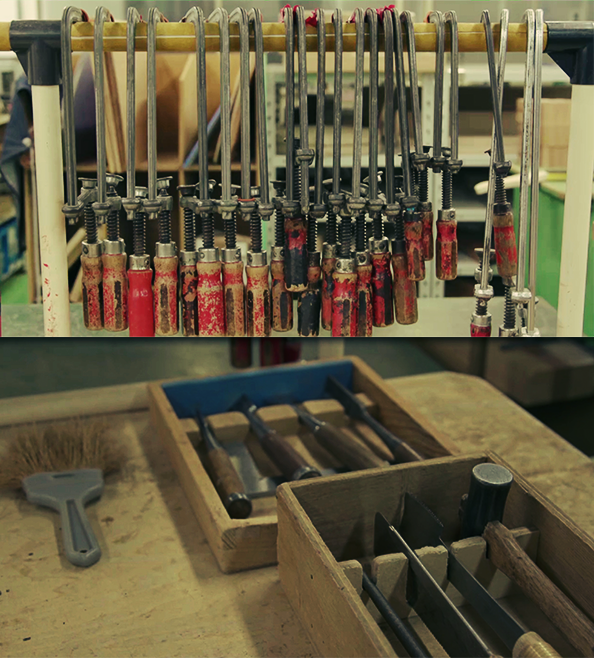
기타 제작에 사용되는 도구 대부분은 목적에 맞게 수작업으로 만들어야 하며, 많은 도구들이 단일 모델에 맞게 특수 제작되므로 다른 기타에 사용할 수 없습니다. 기타 제작자의 일관성 있는 완벽한 악기 생산을 편리하게 해줄 도구와 지그 개발은 Yamaha의 장인정신에 대한 접근방식에서 중요한 요소이지만, 도구와 지그는 사용하면서 마모되어 제대로 맞춰지지 않을 수 있습니다. 따라서 항상 완벽한 작업 상태를 유지할 수 있도록 각별히 주의해야 합니다. 이는 전반적인 품질 관리에서 보이지 않지만 필수적인 부분입니다.
-
살아 있는 제작 공정
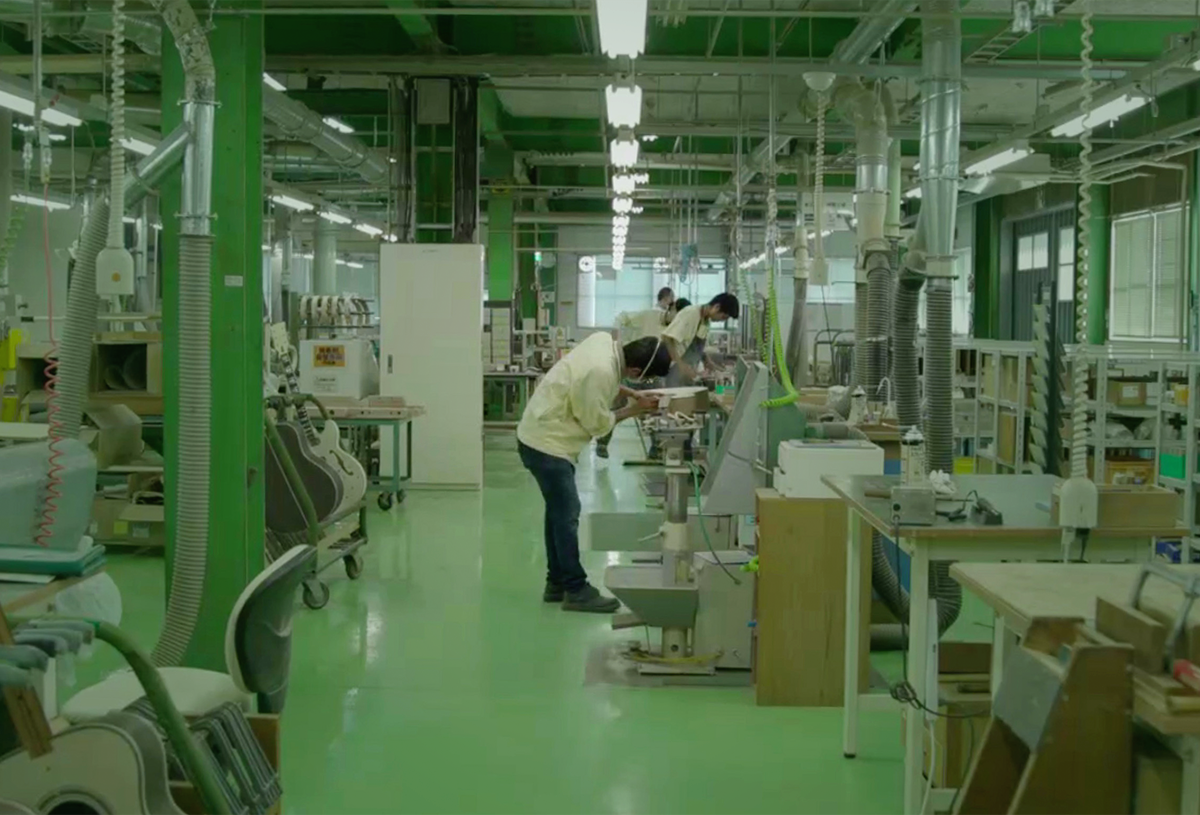
고급 기타 제작은 숙련된 장인의 기술에 의존하기 때문에, 미래에도 일관성 있고 꾸준한 품질을 보장하는 유일한 방법은 차세대 장인에게 노하우를 전수하는 것입니다. 이 기술 유형은 사람 간의 직접 견습을 통해서만 온전히 전달될 수 있기 때문에, Yamaha는 이 과정을 기타 제작 공정에 공식적으로 포함했습니다. 세월이 흐르면서 기타 제작자 팀에 변화가 있지만, Yamaha는 기타의 지속적 진화를 위해 기본 기술 및 과정 중에 개발되는 여러 혁신 기술이 전수될 수 있도록 노력합니다.
-
기타 제작 공정
Wood Selection
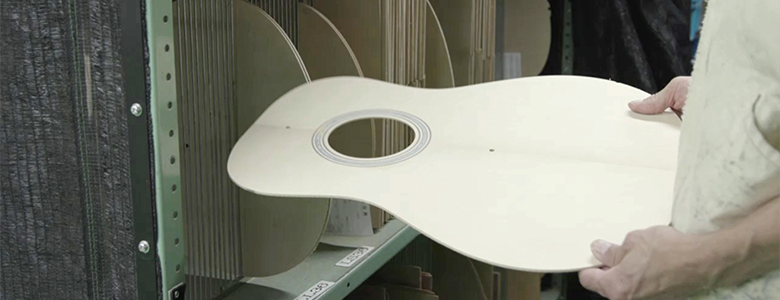
The materials used to craft a guitar are chosen to match the role and characteristics of each part of the instrument. On an acoustic guitar, the top plays the most important part in transforming the vibrations of the strings into sound, and is usually made of a light, resonant wood such as spruce. Conversely, the sides and back of the guitar must be made from a comparatively stiff, heavy wood such as rosewood, in order to provide support for the vibrations of the top.
The process of balancing strength, sound and looks is repeated for every part of every guitar, and the best materials are chosen accordingly.
Wood Drying
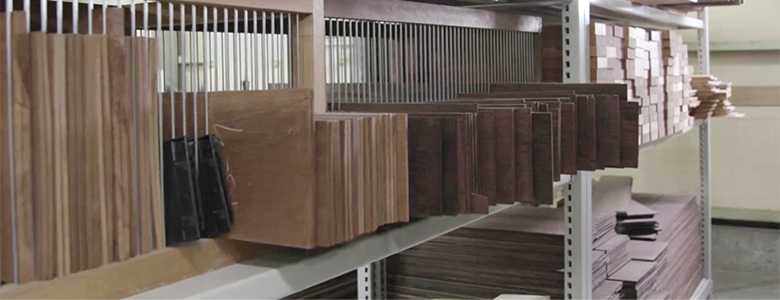
The drying process is a crucial stage in the making of Yamaha guitars.
When building a guitar, ensuring the wood used has the right level of moisture, and that the moisture level is stable, is essential to the quality of the finished instrument. Yamaha produces a great many instruments that are made of wood, and as a result, has accrued a wealth of knowledge on how to lower the amount of moisture in an instrument, and then maintain the desired moisture level.
Yamaha utilizes a combination of natural and artificial drying to reduce the moisture to a level of approximately five percent. Wood that has finished artificial drying is seasoned in a room at constant humidity and temperature to ensure that its moisture content remains stable in the wide variety of conditions it may encounter around the world.
A.R.E. / Acoustic Resonance Enhancement
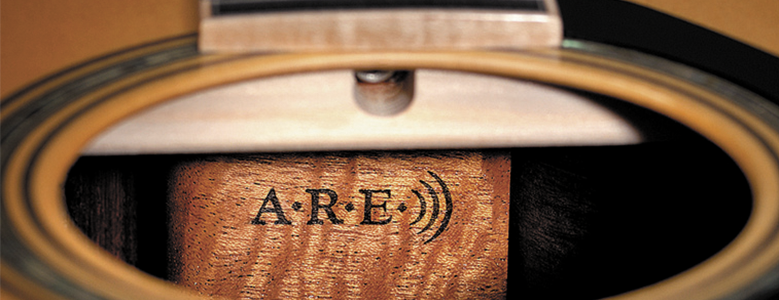
A.R.E. is a proprietary technology developed by Yamaha that alters wood in the same manner as years of aging does, breaking down and changing its internal structure.
By changing the shape of the wood fibres at a microscopic level and breaking down hemicellulose, a material that causes the fibres to stick together, ARE gives a guitar the same mature, rich, warm, open sound as that of an instrument that has been played for years. A.R.E. is applied as part of the final drying process.
Woodworking
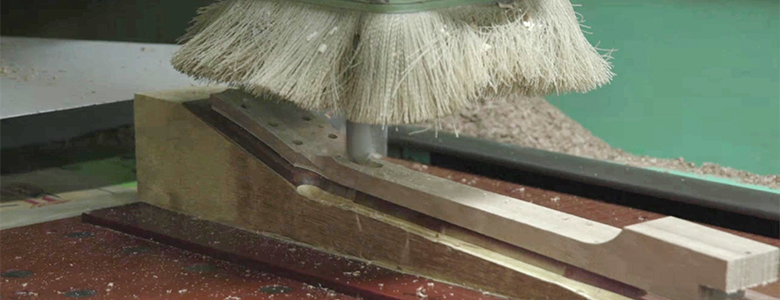
Advanced techniques utilizing computer-controlled machinery are used for processes that require high precision and repeatability, such as cutting fret slots and machining guitar bridges. These modern guitar building methods are used at Yamaha factories in Japan, China, and Indonesia, and combined with the traditional handcrafting skills and know-how developed through more than 60 years of crafting guitars in Japan and at our factories around the world.
Woodworking: attaching the bracing

The bracing on an acoustic guitar is an extremely important element in maintaining the strength of an acoustic guitar’s top while transmitting the vibrations of the body throughout the instrument.
At Yamaha, we utilize methods including vacuums and air-presses to ensure a high level of secure clamping for the bracing. These methods preserve the strength of the bond between the bracing and the guitar top and back, reducing the loss of vibrations throughout the instrument.
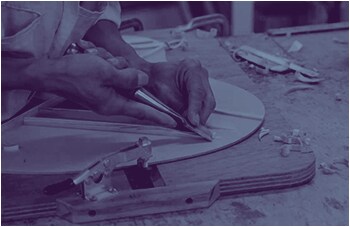
Carving the bracing requires extreme skill and sensitivity from an experienced guitar builder. Chisels are used to shape the bracing, and then the craftsman taps it to check its sound. This task is repeated with painstaking care to produce the perfect bracing shape.
Woodworking: attaching the linings
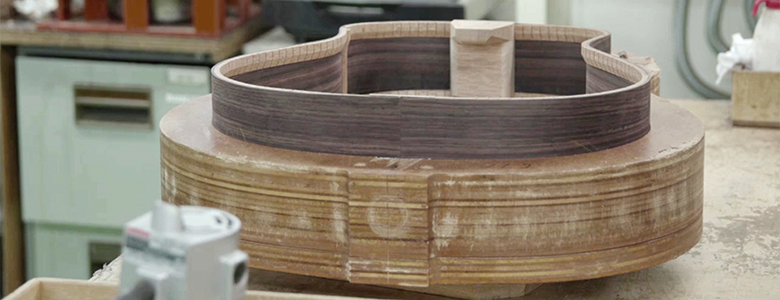
Acoustic guitar linings are thin sheets applied to the inner surfaces of the instrument sides so that they can be joined to the guitar top and back. They play a key role in transmitting the vibrations of the guitar top from the sides to the back, spreading them throughout the body of the instrument. As with every other step in building a guitar, precision is key – the linings have to be perfectly shaped, and uniformly and firmly fitted to the curves of the guitar body in order to be strong and stable.
Woodworking: bending the sides
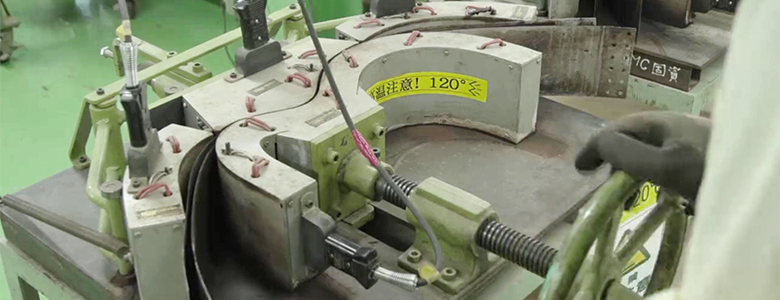
To make the curved shape of an acoustic guitar from a flat piece of wood, heat is applied to the side, which is then curved using a press. After removing it from the press it is placed in a mold, and cooled, eliminating moisture. This process has to be monitored carefully as applying too much heat will cause moisture retention, causing the guitar to deform later, while too little heat can result in the sides cracking.
Woodworking: gluing the body
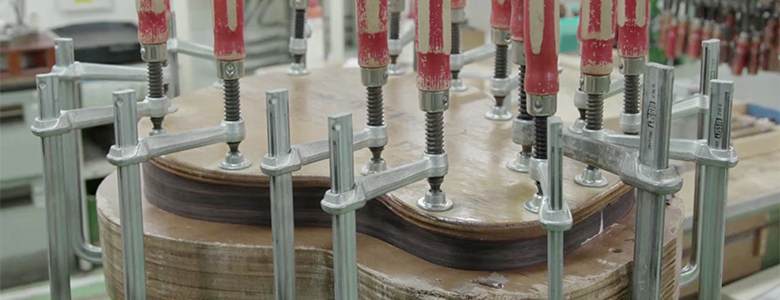
Different Yamaha guitars use different processes, but for L Series acoustic guitars the top and sides are glued first, followed by the back.
This step-by-step process results in less residual stress when the body is complete than when they are glued at the same time, making it easy for the whole body to vibrate and product a rich, resonant tone.
Woodworking: fitting the binding
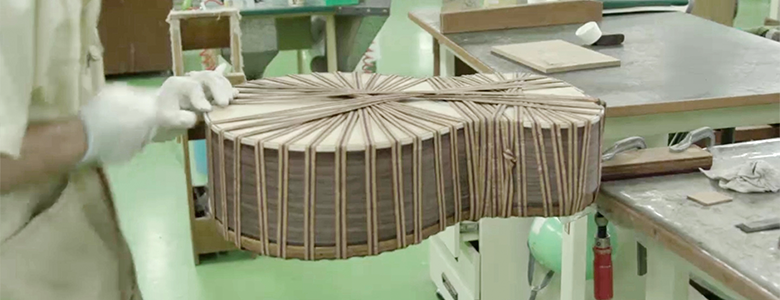
There are two main types of binding —those made from resin, and those crafted from wood. When gluing resin inlays a special glue that melts the resin while gluing is used and then clamped to accelerate adhesion. For wood inlays a different adhesive is used, with parts being fixed firmly in place with clamps during the time it takes for the bond to dry.
Woodworking: joining the neck and body
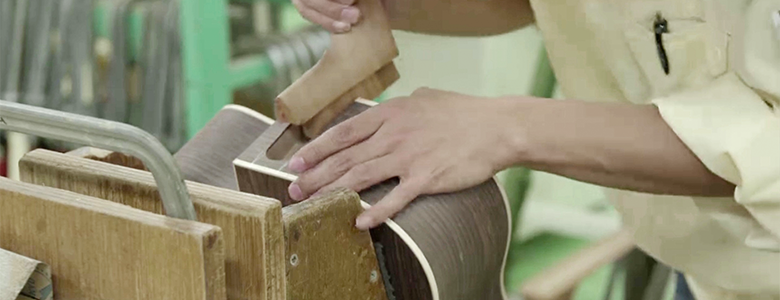
Yamaha’s custom-built classical guitars are made using a Spanish-style construction in which the heel of the neck and the neck block are crafted as a unified whole from a single piece of wood. For all other models, the neck is inserted into a groove cut into the body, forming a dovetail joint.
A single stroke with a plane may change the strength or angle of the joint, affecting the sound or action height of the guitar significantly, so this method requires a high degree of precision and skill.
Finishing

Guitar finishing work is separated into four main processes: the undercoat and mid coat for the wood filler, top coat, and polishing. Sanding is carried out at each stage, moving gradually to a finer-grained sandpaper as the surface becomes smoother.
During coating, a film approximately 10 microns (0.01mm) thick is applied precisely with each spraying. Each coating is applied in a layer that is not too thin, nor too thick, to avoid beading of the paint. The finishes used are developed in a joint effort between Yamaha’s in-house research divisions and finish manufacturers, with an emphasis on sound, ease of application, and the ability to cope with changes in the guitar’s environment.
Finishing: Shellac coating
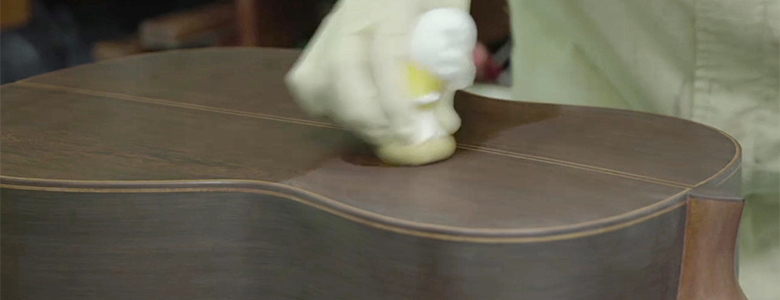
Shellac is used in coatings for custom classical guitars.
This is a traditional method of coating used in Spain, which contains the purified secretions of the lac bug, an insect found in Southeast Asia. Shellac coating is the process of dissolving this secretion in alcohol and then applying it in thin layers with a pad. Each coat is approximately 1/100th of the thickness of a normal coat of paint.
Shellac coatings are applied in approximately 300 layers, and must be dried after each layer. Because of this, a shellac coating takes around three months to complete.
Buffing
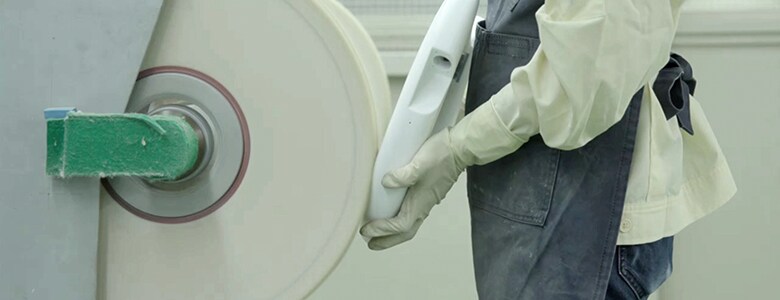
Buffing is the last process in applying the guitar’s finish..
A range of different abrasive compounds and buffing cloths are used to buff the guitar to a brilliant shine. Different finish types result in coatings of differing hardness, so it is necessary to take measures such as altering the RPM of the buffing machine or reduce the strength with which it is applied to get a perfect finish.
Installing the frets
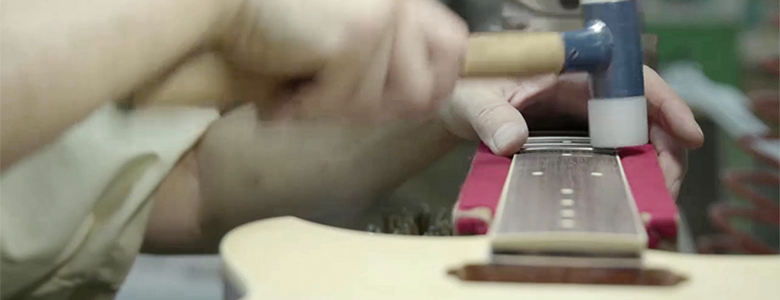
After finishing, the surface of the fret board is sanded and the frets are installed.
The frets are fitted last because the shape of the neck changes after finishing and during the post-finishing drying process, so installing the frets prior to finishing would necessitate a great deal of sanding during the final adjustment of the guitar.
Joining the neck and body (electric guitars and basses)

For electric guitars and basses with bolt-on necks, the neck and body are finished separately, and then joined at the start of the assembly process. Fitting them together without any gap and adjusting the angle of the joint to achieve optimum playability requires skill, precision and patience
Attaching the bridge
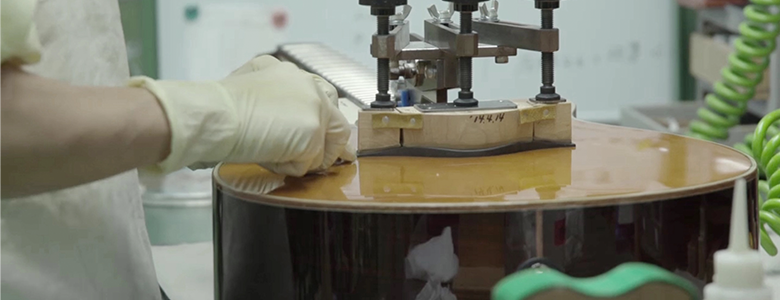
After installing the frets on an acoustic guitar, the next step is to attach the bridge.
The bridge is clamped firmly to the guitar’s top to ensure that the string vibrations are transmitted properly.
Because attaching the bridge in the perfect position is crucial to an acoustic guitar’s sound and playability, a special tool is used to keep clamping strength at a fixed level and ensure that there is no movement or variation.
Final assembly

Final assembly is when the rest of the guitar’s hardware and parts, including any pickups or electronics on an electric guitar or bass are fitted. Every single part is adjusted carefully on each instrument to optimize the sound, ensuring that string vibrations are transmitted properly and playability is perfect.
I.R.A. / Initial Response Acceleration (electric guitars and basses)
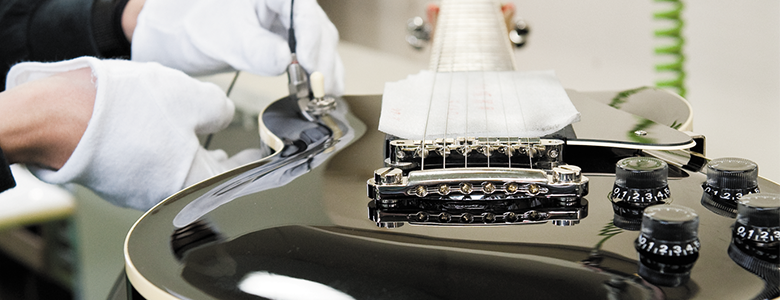
After assembly and adjustment, some electric guitars feature a process called Initial Response Acceleration where the completed guitar is vibrated at specific frequencies and intensities . Subjecting the guitar to these vibrations eliminates stresses between parts built up during assembly, resulting in an instrument with excellent resonance, despite being completely new.
Inspection
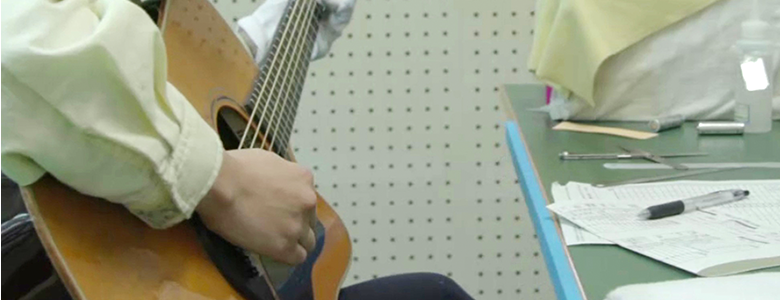
Inspection is carried out at every stage of the building process, but a final inspection is performed to double-check the sound and playability of each guitar.
If these are all approved and the guitar meets our exacting specifications, the exterior of the instrument is carefully inspected for marks and flaws. When that final hurdle is passed, the finished guitar is packed and shipped to its new home.